
How Manufacturers Estimate Warranty Liabilities
One of the most misunderstood areas of finance is how manufacturers estimate warranty liabilities.
From the outside, warranty reserves can look simple. In reality, proper warranty liability modeling is much more complicated.
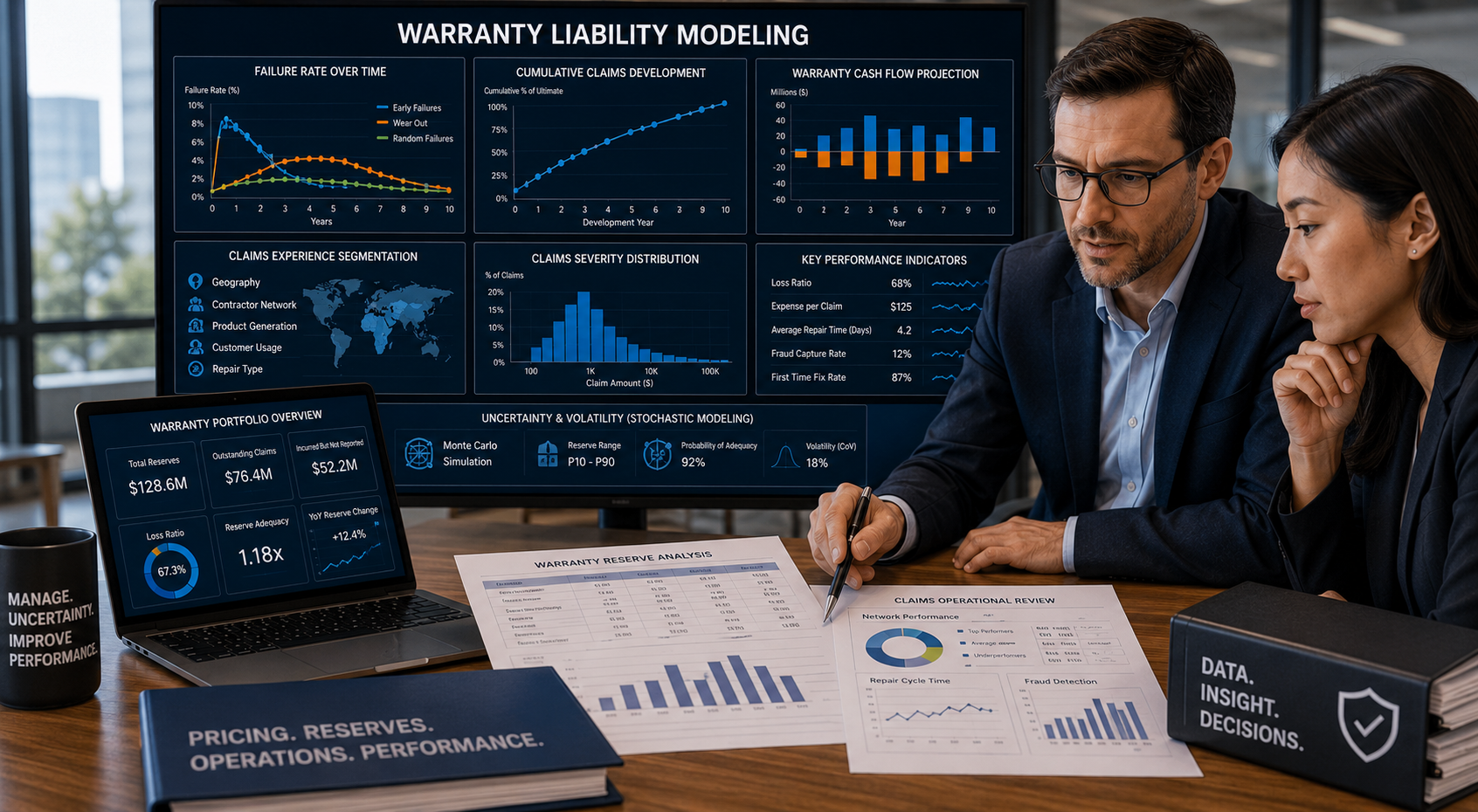
Different products fail differently. Some fail early because of manufacturing defects, while others develop long-term wear patterns years later. This is where warranty failure rate modeling and product reliability analytics become critical.
A good warranty claims modeling process often segments experience by geography, contractor network, product generation, customer usage patterns, and repair type.
Companies increasingly rely on stochastic warranty modeling, predictive analytics warranty claims, and warranty cash flow projections to understand volatility and long-term profitability.
Another major issue is operational performance. A poor repair network can quietly destroy margins. Slow claims handling can increase severity. Weak fraud controls can distort the entire portfolio.
Strong service contract actuaries and warranty insurance consultants help organizations balance pricing, reserve adequacy, operational efficiency, and compliance requirements.
At the end of the day, good warranty forecasting is really about uncertainty management. The companies that perform best are usually the ones that aggressively monitor KPIs, refine pricing continuously, and improve claims operations over time.