
Why Extended Warranty Programs Are Becoming More Sophisticated
The extended warranty industry has changed dramatically over the last decade.
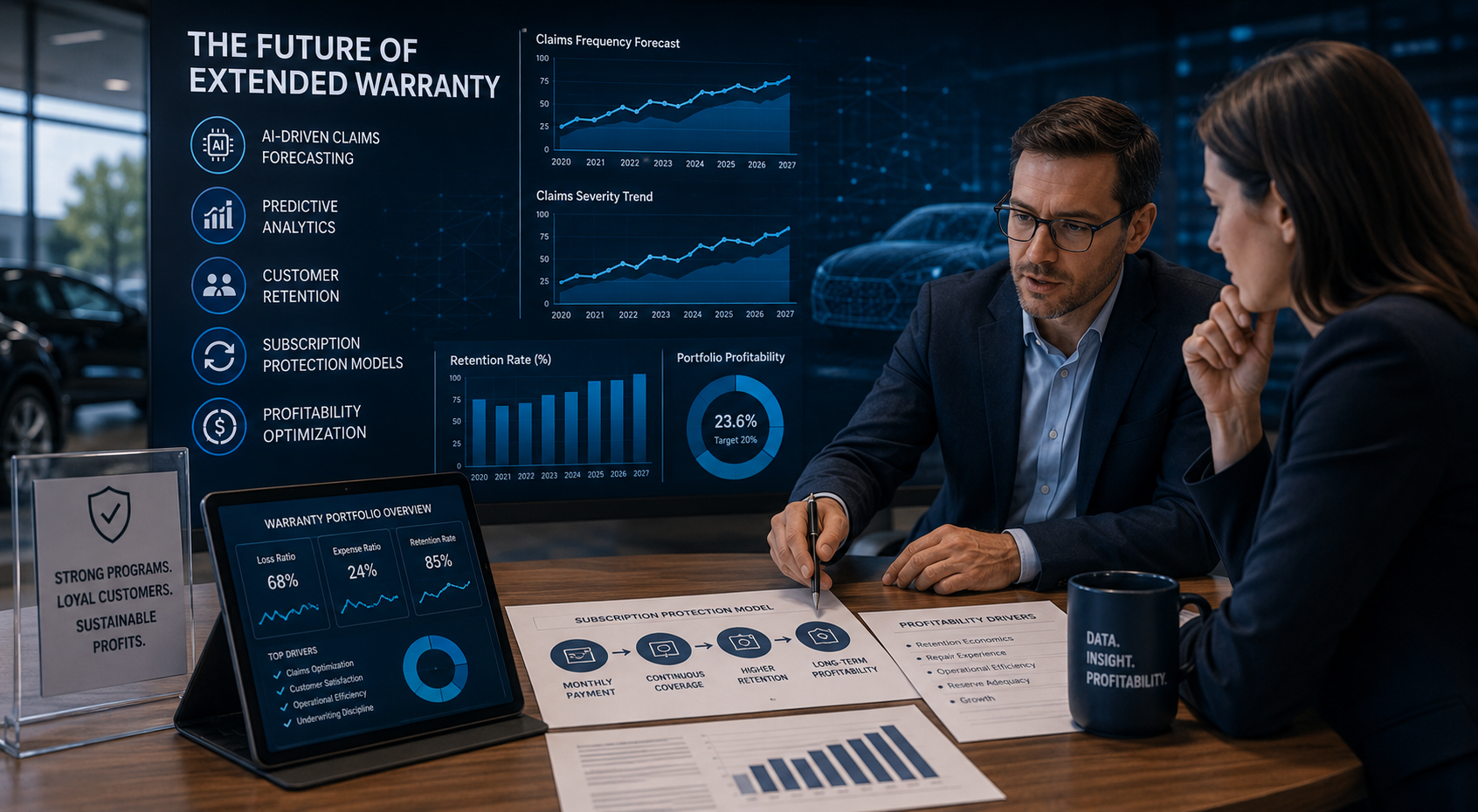
What used to be a relatively simple add-on product has evolved into a highly analytical business involving actuarial modeling, predictive analytics, customer retention analysis, and AI-driven claims forecasting.
Margins are under pressure because of inflation, labor shortages, supply chain disruption, and increasing product complexity. At the same time, customers expect broader coverage and faster service.
That combination creates pressure on profitability.
This is why many firms now seek warranty product optimization, warranty profitability analysis, warranty claims optimization, and warranty AI analytics.
One major trend is the shift toward subscription-style protection products. Instead of selling a one-time service contract, companies increasingly build recurring maintenance memberships and embedded protection plans.
These models create different actuarial dynamics than traditional warranties. Retention becomes critically important.
Modern warranty consultants increasingly focus on retention economics, customer satisfaction, repair experience, and long-term portfolio profitability.
A strong warranty program today is no longer just about paying claims. It is about balancing profitability, growth, customer retention, operational efficiency, reserve adequacy, and underwriting discipline.